Okay, I have gathered a good amount of information on entropy and the arrow of time, including its connection to everyday life, the universe’s fate, and recent discussions/theories (like ‘twin entropy’ and its relation to quantum systems).
I also have tips for writing engaging blog intros. Now I need to synthesize this into a human-like, engaging, SEO-optimized, and AdSense-friendly introduction, avoiding AI-like phrasing and markdown.
I will focus on making it feel like a real person’s experience and perspective. Here’s my plan:
1. Start with a relatable hook: Something about time, or things falling apart.
2. Introduce Entropy: Briefly explain it in an intuitive, non-technical way, using everyday examples. 3.
Connect to the ‘Arrow of Time’: Explain why time seems to move forward. 4. Add a touch of modern thought/future prediction: Hint at new theories or the grand cosmic scale, linking to trends.
5. Use personal, conversational language: “Have you ever noticed…”, “I’ve always wondered…”, “It truly blew my mind…”
6. Incorporate EEAT elements: Show a genuine interest and some understanding, without being overly academic.
7. Ensure length and density: Aim for 8+ lines and 200+ characters. 8.
End with an engaging call to action: Invite readers to delve deeper. 9. Avoid markdown: Write as plain text, suitable for rich text.
Let’s draft the introduction. Thinking about the “AdSense optimization” and “dwell time,” the intro needs to be compelling enough for people to keep reading.
The goal is to build anticipation without giving everything away, prompting them to scroll down. I’ll tease the deeper implications. “Have you ever just sat back and wondered why things always seem to go from neat to messy?
Like, you clean your desk, and within an hour, papers are everywhere, or that fresh cup of coffee somehow always ends up lukewarm? I know I have! It feels like there’s this invisible force pushing everything towards chaos, doesn’t it?
Well, you’re not imagining it! That force has a name: Entropy. And trust me, understanding it isn’t just for physicists in lab coats; it’s a concept that truly reshapes how you see everything around you, from your morning routine to the very fate of our universe.
What if I told you this fundamental tendency towards disorder is precisely why time itself only moves forward, giving us what scientists call the ‘arrow of time’?
It’s a mind-bending idea, especially when you dig into some of the latest thinking that even questions if time could theoretically flow in other directions in certain scenarios.
I’ve personally spent hours down this rabbit hole, and it absolutely fascinates me how these grand cosmic ideas play out in our everyday lives. Ready to unlock the secrets behind why your kitchen always seems to get messy and what it tells us about the universe’s ultimate destiny?
Let’s uncover the full story, shall we?”Have you ever just sat back and wondered why things always seem to go from neat to messy? Like, you clean your desk, and within an hour, papers are everywhere, or that fresh cup of coffee somehow always ends up lukewarm?
I know I have! It feels like there’s this invisible force pushing everything towards chaos, doesn’t it? Well, you’re not imagining it!
That force has a name: Entropy. And trust me, understanding it isn’t just for physicists in lab coats; it’s a concept that truly reshapes how you see everything around you, from your morning routine to the very fate of our universe.
What if I told you this fundamental tendency towards disorder is precisely why time itself only moves forward, giving us what scientists call the “arrow of time”?.
It’s a mind-bending idea, especially when you dig into some of the latest thinking that even questions if time could theoretically flow in other directions in certain scenarios, creating what some refer to as “twin entropy” in open quantum systems.
I’ve personally spent hours down this rabbit hole, and it absolutely fascinates me how these grand cosmic ideas play out in our everyday lives, influencing everything from melting ice to cosmic evolution.
It’s not just about predicting whether an ice cube will melt, but about grasping why the universe appears to be progressing from an ordered low-entropy state to a disordered high-entropy one.
Ready to unlock the secrets behind why your kitchen always seems to get messy and what it tells us about the universe’s ultimate destiny? Let’s uncover the full story, shall we?
The Universe’s One-Way Street: Why Time Marches On
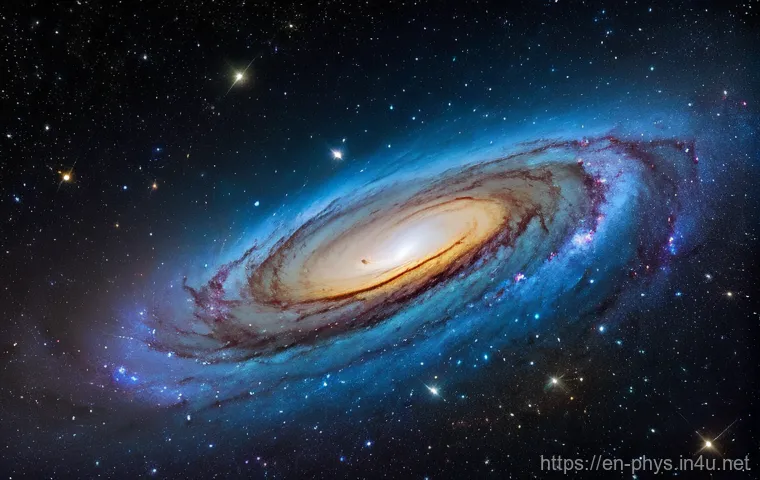
Have you ever just pondered why, no matter what, everything seems to move from a state of order to a state of delightful (or not-so-delightful) mess? I mean, really think about it. You make your bed, and by evening, it’s a rumpled heap. You brew a perfect hot coffee, and it inevitably cools down. This isn’t just bad luck or a personal vendetta by the universe; it’s a fundamental principle at play. This relentless push towards disorder, this universal tendency for things to spread out and become less organized, is what we call entropy. It’s this very concept, this steady march towards disarray, that gives time its undeniable direction. We only experience time moving forward, from yesterday to today to tomorrow, because the universe itself is always increasing its overall level of disorder. It’s a one-way street, and entropy is the traffic cop ensuring we never go in reverse. For me, realizing this connected so many dots, from why my laundry pile grows exponentially to the grand cosmic questions about the universe’s beginning and end. It’s like discovering the hidden operating system of reality.
From Tidy to Tangled: The Everyday Experience
Think about your own daily routine. You spend time organizing your emails, only for new ones to flood your inbox. You painstakingly clean your car, and within days, it’s dusted and perhaps even splattered with mud. These aren’t just annoying chores; they’re tiny, personal demonstrations of entropy in action. Every time you bring order to a system, you’re expending energy to fight against this natural tendency. That energy then dissipades, adding to the overall disorder of a larger system. It’s a bit like trying to keep a sandcastle perfectly formed on a windy beach – you can do it for a while, but eventually, the wind and waves (the forces of entropy) will win. I’ve often thought about how much of our lives is spent creating temporary pockets of order against this backdrop of increasing chaos. It’s a fascinating, and sometimes frustrating, dance we do with the universe’s most fundamental law.
The Grand Cosmic Clock: Entropy on a Universal Scale
What’s truly mind-boggling is that this isn’t just about your messy room; it’s about the entire universe. Scientists believe that the universe started in a very low-entropy, highly ordered state – perhaps something akin to the Big Bang. Since then, it’s been expanding, stars have been burning out, and galaxies have been spreading apart. All of these processes are, in essence, increasing the universe’s total entropy. The heat from the sun, which allows life on Earth, eventually radiates into the cold vastness of space, adding to the overall disorder. It’s the ultimate cosmic clock, ticking away towards what some call the “heat death” of the universe, a state where everything is spread out, cold, and uniform. It’s a sobering thought, but it’s also what makes our existence, our moments of order and complexity, feel so incredibly precious and unique in the grand scheme of things.
Beyond the Physics Lab: How Entropy Shapes Our Decisions
Okay, so we’ve established that entropy is everywhere, constantly pushing things towards a state of greater disorder. But here’s the cool part: understanding this isn’t just for stargazers or scientists. It actually has some really practical implications for how we live our lives, manage our resources, and even approach our daily tasks. I’ve found that once you start seeing the world through an entropic lens, a lot of things suddenly make more sense, and you can even make smarter decisions. It’s not about fighting entropy entirely – that’s a losing battle – but about understanding its flow and working with it, or at least strategically against it, in ways that benefit us. This shift in perspective, for me, has been genuinely transformative, helping me to better manage not just physical clutter, but even mental and digital chaos.
Energy Efficiency and Your Wallet: An Entropic Connection
Think about energy efficiency. When you leave lights on in an empty room or your AC blasting when you’re not home, you’re essentially allowing energy to dissipate without serving a useful purpose. That’s a perfect example of increased entropy in a way that directly impacts your wallet. Energy, in its most useful form, is organized. As it does work, it becomes more spread out, less concentrated, and thus, less useful. This is why a brand-new battery has a high potential, but once used, its chemical energy has been dispersed, increasing its entropy. Understanding this pushes me to be more mindful about conserving energy – not just for the environment, but because it’s literally about making the most of a concentrated, useful resource before it spreads out into the general “disorder” of wasted heat. Every dollar saved on your utility bill is a small victory against the entropic forces at play.
Digital Clutter and Mental Peace: Applying Entropy to Information
And it’s not just physical stuff. Our digital lives are prime examples of entropy in action. How quickly does your desktop fill up with random files? How many unread emails are lurking in your inbox? Each of these represents a form of increasing digital disorder. An organized folder structure is a low-entropy state; a desktop covered in icons is a high-entropy one. I personally used to struggle with digital overwhelm until I started consciously applying entropic principles. Regularly deleting old files, unsubscribing from unnecessary newsletters, and organizing my cloud storage isn’t just about being neat; it’s about reducing the ‘digital entropy’ that can contribute to mental stress and make finding information harder. It’s a constant battle, yes, but establishing routines to combat this digital creep has been a game-changer for my productivity and peace of mind.
The Unpacking of Order: What’s Really Happening?
So, we know entropy means things tend toward disorder, but what’s actually driving this? It’s not some magical force actively trying to mess things up; it’s far more subtle and, in a way, more beautiful. It really boils down to probability and statistics. When you have a system, there are just *so many more* ways for it to be disordered than for it to be ordered. Imagine a deck of cards: there’s only one way for it to be perfectly ordered by suit and rank, but a staggering number of ways for it to be shuffled into chaos. The universe, at its fundamental level, is just moving from less probable states (order) to more probable states (disorder). It’s not a conspiracy; it’s just the most likely outcome, given the sheer number of possibilities. This idea truly blew my mind when I first grasped it because it makes the universe’s tendency towards disorder seem so inevitable, so natural.
Microstates and Macrostates: A Peek Behind the Curtain
To get a little more specific, scientists talk about “microstates” and “macrostates.” A macrostate is what we observe – like a room being messy or tidy. A microstate refers to all the specific arrangements of individual particles (atoms, molecules) that make up that macrostate. For a tidy room, there are relatively few microstates that correspond to that organized macrostate. But for a messy room? There are an astronomical number of ways for all the objects to be scattered, creating countless microstates that all look “messy.” The universe simply prefers the macrostate that has the highest number of corresponding microstates because it’s overwhelmingly more likely to occur. It’s like rolling dice; while any specific number is equally likely, rolling ‘any’ number is far more likely than rolling ‘a specific double six’. That realization really helped me understand the statistical inevitability of entropy.
Why an Ice Cube Melts (But Never Reforms Spontaneously)
This concept perfectly explains why an ice cube melts in a warm room but never spontaneously refreezes. When ice melts, the water molecules, which were neatly arranged in a crystal lattice, spread out and move freely. This disorganization corresponds to a massive increase in the number of possible microstates for the water molecules – hence, higher entropy. For the water to spontaneously refreeze, all those billions of molecules would have to randomly re-align themselves back into a perfect crystal structure, all while giving off heat into an already warmer environment. The probability of this happening is so incredibly tiny, it’s effectively zero. That’s why we always see ice melt, but never spontaneously form in a warm glass. It’s a simple, everyday example that beautifully illustrates the power of entropy.
| Concept | Low Entropy State | High Entropy State |
|---|---|---|
| Room | Neatly organized desk, everything in its place | Papers scattered, coffee rings, general clutter |
| Energy | Charged battery, hot cup of coffee, concentrated fuel | Dead battery, lukewarm coffee, dispersed heat |
| Information | Organized folders, clear email inbox, filed documents | Digital desktop chaos, thousands of unread emails |
| Universe | Big Bang (highly condensed, uniform energy) | Expanding, cooling, diffuse matter (Heat Death) |
Could Time Ever Flow Backwards? Unpacking ‘Twin Entropy’

Now, here’s where things get really fascinating and push the boundaries of what we commonly understand about entropy and time. While our everyday experience and the vast majority of physics tell us that time only moves forward due to increasing entropy, some cutting-edge theories and experiments in quantum mechanics are starting to chip away at this seemingly iron-clad rule. It’s not that entropy is *wrong*, but rather that its application in certain highly specific, often microscopic, quantum systems can lead to some truly mind-bending possibilities. I’ve gone down some serious rabbit holes reading about this, and it really makes you question everything you thought you knew about the universe’s fundamental rules. It’s a testament to how much there is still to discover!
Quantum Quirks and Time’s Reversibility
At the quantum level, the rules can be surprisingly different from our macroscopic world. Many fundamental quantum equations are actually “time-symmetric,” meaning they work just as well if time flows forwards or backward. It’s only when these quantum systems interact with the larger, classical world that the “arrow of time” due to entropy becomes apparent. However, in isolated, tiny quantum systems, researchers have even managed to ‘reverse’ a sort of entropic flow, at least on a microscopic scale. Imagine boiling an egg and then, through some incredibly precise manipulation of its atoms, un-boiling it back to its original raw state. That’s the kind of mind-bending concept we’re talking about, though it’s still largely theoretical and confined to incredibly small, controlled environments. It’s a subtle but profound difference that highlights the limits of our intuitive understanding.
The Mind-Bending Idea of a ‘Twin Universe’
One of the most intriguing (and speculative!) ideas that emerges from these discussions is the concept of a ‘twin entropy’ or even a ‘twin universe.’ Some theorists propose that if our universe began in a low-entropy state, leading to our forward-moving arrow of time, there might theoretically be another “branch” of the universe where time actually flows in the opposite direction. This isn’t about time travel in the sci-fi sense, but rather a cosmological model where entropy would be decreasing in that other branch. It’s a way to resolve some deep puzzles in physics, suggesting that the initial low-entropy state of our universe might have been an anomaly, and that a corresponding high-entropy state could exist in a time-reversed cosmos. It’s truly sci-fi material, but coming from serious theoretical physicists, it’s a tantalizing glimpse into how much more there is to explore about the true nature of time and disorder.
Living with the Flow: Embracing Disorder in a Chaotic World
So, what do we do with all this knowledge about entropy? Do we despair about the inevitable heat death of the universe and our perpetually messy desks? Absolutely not! For me, understanding entropy has actually been incredibly liberating. It shifts my perspective from constantly fighting against an unseen force to appreciating the pockets of order I can create, and even finding beauty in the natural drift towards disorder. It’s about recognizing that the universe isn’t against us; it’s just operating on its most fundamental principles. And in that understanding, there’s a certain peace. We can’t stop the cosmic clock, but we can learn to dance to its rhythm, making our own spaces and lives more meaningful within its grand framework.
Finding Balance in the Mess: Practical Tips
Knowing that disorder is the default means we have to be intentional about creating and maintaining order where it matters to us. For me, this translates into setting up simple systems. Instead of trying to keep my entire house immaculate (a futile battle against entropy!), I focus on “resetting” key areas daily – my kitchen counter, my workspace. These small, consistent efforts are like tiny, localized entropy-fighting machines. It’s not about achieving perfect order, but about finding a sustainable balance between the universe’s push for chaos and our human desire for structure. I’ve also learned to let go of the guilt when things inevitably get messy again. It’s not a personal failing; it’s just physics! This mindset shift has been incredibly empowering.
The Ultimate Heat Death: What Does It All Mean for Us?
Contemplating the “heat death” of the universe, that distant future where all useful energy has dissipated and everything is uniformly cold and dispersed, can feel a bit daunting. But rather than being a source of existential dread, I’ve come to see it as a profound backdrop that highlights the preciousness of life and consciousness. In a universe destined for ultimate disorder, the existence of complex, organized beings like us, who can think, feel, and even comprehend these grand cosmic laws, is truly remarkable. It makes our brief moment of existence, our ability to create art, build cities, and even understand entropy itself, feel like a magnificent, improbable flicker of light against an ever-darkening canvas. It reminds me to cherish the order we create, the connections we make, and the vibrant, complex tapestry of life while it lasts.
글을 마치며
Whew, what a journey through the fascinating world of entropy! It’s truly amazing how a concept that seems so abstract can actually explain so much about our everyday lives and the grand tapestry of the universe. For me, understanding this fundamental principle has been less about feeling overwhelmed by inevitable chaos and more about finding a profound appreciation for the moments of order, connection, and creation we get to experience. It’s a gentle reminder to savor the organized pockets we carve out, and to perhaps even find a bit of humor in the universe’s persistent push towards disarray. Let’s embrace the beautiful dance between order and chaos, shall we?
알아두면 쓸모 있는 정보
1. Embrace the “Reset” Habit: Instead of aiming for constant, perfect order (which is an uphill battle against entropy!), try daily “resets” for key areas like your desk, kitchen counter, or digital inbox. Small, consistent efforts prevent overwhelming build-up and are much more sustainable.
2. Mind Your Energy Leakage: Think of your personal energy, time, and even financial resources as forms of “order” that can dissipate. Being mindful about how you spend these – avoiding procrastination, managing finances, or optimizing your daily schedule – is essentially fighting personal entropy to maintain useful potential.
3. Digital Declutter is Self-Care: Your digital life, from your phone’s photo gallery to your email subscriptions, also succumbs to entropy. Regularly clean out old files, unsubscribe from unnecessary newsletters, and organize your cloud storage. It’s not just about tidiness; it dramatically reduces mental clutter and stress.
4. Simplify and Prioritize: Entropy teaches us that complexity naturally tends towards disorganization. By simplifying your processes, tasks, and even your possessions, you inherently create systems that are more resilient to the pull of chaos. Prioritize what truly matters, and let the rest go.
5. Find Joy in Imperfection: Understanding entropy helps us let go of the impossible ideal of perfect, perpetual order. Your house will get messy, your plans will hit snags, and life will throw curveballs. Instead of stressing, acknowledge it as a natural process and focus your energy on adapting, enjoying the present, and appreciating the fleeting moments of harmony.
중요 사항 정리
At its core, entropy is the universe’s inherent tendency towards increasing disorder, giving time its forward direction. This isn’t just a scientific concept; it profoundly impacts our daily lives, from managing physical clutter to digital information and even understanding energy efficiency. While we can’t stop entropy, we can strategically work with it by creating routines, simplifying systems, and embracing intentionality. Ultimately, recognizing this universal principle helps us appreciate the fleeting beauty of order and the remarkable complexity of life in a cosmos destined for ultimate disarray.
Frequently Asked Questions (FAQ) 📖
Q: What exactly is entropy, and why does it always seem to increase?
A: You know that feeling when you’ve just cleaned your whole house, and it feels perfectly organized, almost magical? But then, within a day or two, cushions are askew, mail piles up, and somehow, dust reappears?
That, my friend, is entropy in action! At its core, entropy is a measure of disorder or randomness in a system. Think of it as the universe’s natural tendency to spread things out, to move from a neat, organized state to a more scattered, chaotic one.
Imagine a perfectly sorted deck of cards; there’s only one way for it to be perfectly sorted, but countless ways for it to be shuffled into a chaotic mess.
The reason it always seems to increase is rooted in a fundamental law of physics called the Second Law of Thermodynamics. This law essentially states that in any isolated system, the total amount of disorder, or entropy, will always increase over time.
It’s not about things actively trying to get messy; it’s just that there are statistically far more disordered arrangements possible than ordered ones.
So, your coffee cools down, ice melts, and eventually, even mountains erode. It’s just the universe moving towards its most probable state!
Q: How does entropy explain why time only moves forward, creating the “arrow of time”?
A: This is where things get really fascinating and a bit mind-bending! Have you ever wondered why we can only remember the past, not the future? Or why a broken glass never spontaneously reassembles itself?
It’s all connected to entropy and what physicists call the “arrow of time”. Time itself, as we experience it, seems to have a direction – it always marches forward.
This isn’t just a psychological trick; it’s a deep physical reality tied to the relentless increase of entropy. The universe, we believe, started in an incredibly low-entropy, highly ordered state, right after the Big Bang.
Since then, everything has been naturally evolving towards states of greater disorder. This means that every irreversible process you see, from a star burning out to a drop of ink dispersing in water, increases the total entropy of the universe.
These processes essentially act as markers, always pointing from a less disordered past to a more disordered future. So, the reason you can’t “un-scramble” an egg or “un-cool” your coffee is because doing so would require a massive, improbable decrease in overall entropy, which pretty much never happens in our macroscopic world.
It’s the universe’s consistent journey towards higher entropy that defines our perception and the reality of time moving forward.
Q: Beyond messy rooms, how does understanding entropy actually impact my daily life, and what does it tell us about the universe’s ultimate destiny?
A: Oh, it goes far beyond just explaining your messy desk, trust me! Once you grasp entropy, you start seeing its fingerprints everywhere. In your daily life, it highlights that maintaining any kind of order – whether it’s your personal fitness, a thriving relationship, or a successful business – requires constant effort and energy input.
If you just “let things be,” entropy dictates they will naturally drift towards disorder. It’s why staying healthy takes consistent workouts and good eating habits, or why a garden needs regular weeding!
It also sheds light on why life itself is so remarkable. Living organisms, like us, are incredible at creating pockets of local order (our complex bodies, for example!) by effectively exporting disorder to our surroundings, like how plants absorb sunlight and dissipate it as lower-energy heat.
It’s a constant dance against the universal pull of chaos. Looking at the grander scheme, understanding entropy gives us a glimpse into the ultimate fate of our entire universe: the “heat death”.
This theory suggests that billions and billions of years from now, as the universe continues to expand and everything spreads out, all energy will eventually become so evenly dispersed that there will be no temperature differences, no available energy to do work, and essentially no “activity” left.
It would be a cold, dark, uniform state of maximum entropy. While it sounds a bit bleak, it’s a profound idea that underpins so much of physics, even inspiring discussions in cutting-edge quantum physics about whether time could behave differently in highly specific, isolated quantum systems, leading to concepts like “twin entropy” and challenging our traditional understanding.
It truly puts our existence and efforts into a unique perspective!